

The Heartbeat of an Aquarium
In the hush of twilight, when the lamps glow softly on glass and water, an unseen ballet unfolds beneath the surface—a dance of clarity, life, and balance. This is no ordinary machinery, but the heart of your aquarium: the filtration system. Like a quiet conductor, it guides water’s story from murky chaos to crystalline serenity. Without the right filter, even the most beautiful aquascape can lose its harmony.
I. The Three Movements of Filtration: Mechanical, Biological, and Chemical
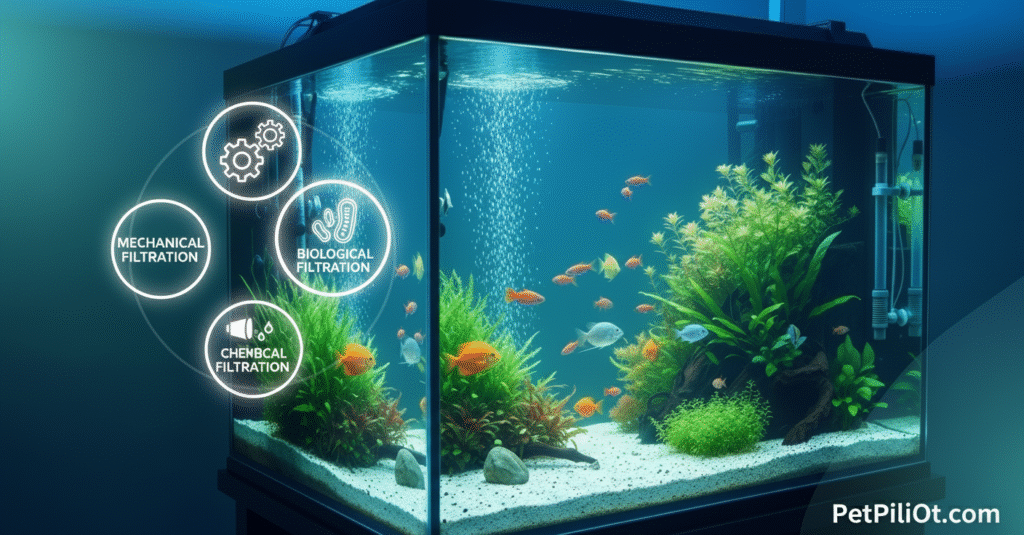
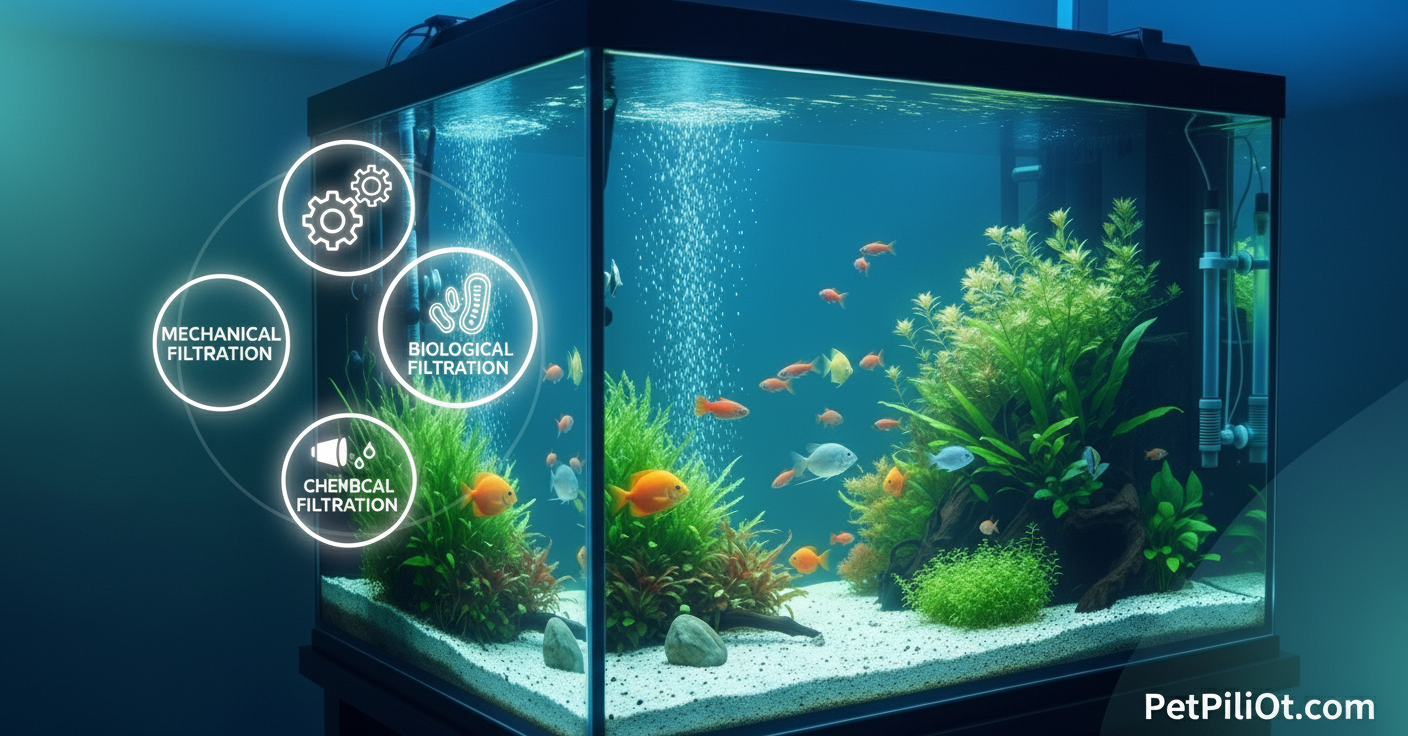
Every masterpiece begins with structure, harmony, and nuance. Aquarium filtration, too, is composed in three essential movements.
1. Mechanical Filtration
The first chords, sweeping away debris and floating particles—uneaten food, drifting plant debris, and fragments of life itself—bringing clarity to the composition.
👉 Aquarium Co-Op | Wikipedia
2. Biological Filtration
Colonies of beneficial bacteria—living in porous media and hidden corners—convert deadly ammonia into manageable nitrates, preserving the fragile balance of life.
👉 Wikipedia | LiveAquaria
3. Chemical Filtration
Activated carbon and specialty media polish the water by removing odors, impurities, and toxins that escape the other two movements.
👉 AZEAH Guide | Wikipedia
Together, they compose the purity of the final tableau.
II. Exploring Aquarium Filter Types
Each filter brings its own melody, its voice in the symphony. Knowing their roles helps you choose wisely.
Sponge Filters
Gentle, humble, powered by air. Perfect for fry tanks, breeding setups, and delicate communities.
👉 Buce Plant | Aquarium Co-Op
Hang-on-Back (HOB) Filters
Versatile virtuosos, perched at the tank’s edge, weaving all three filtration types with adaptability and ease.
Canister Filters
The maestros behind the scenes—powerful, silent, hidden beneath polished cabinetry. Ideal for large, planted tanks.
👉 Light Fish
Fluidized Bed Filters
Like a swirling galaxy of sand or beads, excellent for strong bioloads.
Trickle / Wet-Dry Filters
Effortlessly potent, especially in marine setups.
👉 The Spruce Pets
Under-Gravel Filters (UGF)
Pull water down through the substrate, turning gravel into a biological haven. May conflict with live plants.
Diatom Filters
Rare, but deliver extraordinary clarity for special occasions.
Protein Skimmers (Saltwater Only)
Essential for reef and marine tanks.
👉 Wikipedia
Algae Scrubbers
Living screens of algae, absorbing nitrates and phosphates.
👉 Wikipedia
The Berlin Method
A minimalist reef approach using live rock and skimming.
👉 Wikipedia
III. How to Choose the Right Aquarium Filter
Like selecting the perfect instrument for an orchestra, filter choice depends on multiple factors.
1. Tank Size and Bioload
Canister filters serve densely populated or heavily planted tanks, while sponge or HOB filters suit smaller systems.
👉 The Spruce Pets
2. Fish Species Needs
Betta fish, with delicate fins, prefer low-flow filters. Axolotls thrive with gentle flow.
👉 Do Betta Fish Need a Filter?
3. Aesthetic Preferences
Canisters preserve tank beauty by staying hidden. Perfect for aquascapers.
4. Ease of Maintenance
HOB filters are simple to clean; canisters need more effort.
👉 Aquarium Co-Op
5. Budget
Sponge and HOB filters are economical, while canisters require more investment.
👉 The Spruce Pets
IV. Aquarium Filter Maintenance Tips
Even the most elegant symphony fades if neglected. To keep your filter healthy:
- Maintain Flow Rate: Aim for 4–8 turnovers per hour.
👉 Reddit Aquarium Discussion - Never Replace All Media at Once: Preserve beneficial bacteria.
👉 The Spruce Pets - Use Tank Water for Cleaning: Protect living cultures.
- Have Backup Options: Consider redundancy for emergencies.
V. Writing Your Aquatic Sonata
A filter is not just equipment—it is the soul of your aquarium. Whether it is the silent hum of a canister, the gentle breath of a sponge, or the emerald shimmer of algae scrubbers, each filter adds character to your aquatic world. By choosing wisely and maintaining carefully, you compose not only clarity but also the well-being of your underwater family.
